Instagram Reels post-view ads: what to test now
Instagram has rolled out Reels post-view ads, a placement that plays right after a video ends. What the format does, and how to test it before a client asks.
Contents
Instagram Reels post-view ads are now live across every advertiser account, a placement that runs immediately after an organic Reel finishes, once the viewer has already watched it through. The format arrived quietly over the summer, folded into the same Reels placement tools most accounts already use. For an agency running Meta budgets, the real question is whether this placement is already spending on a client's behalf, and whether anyone checked.
What the placement actually does
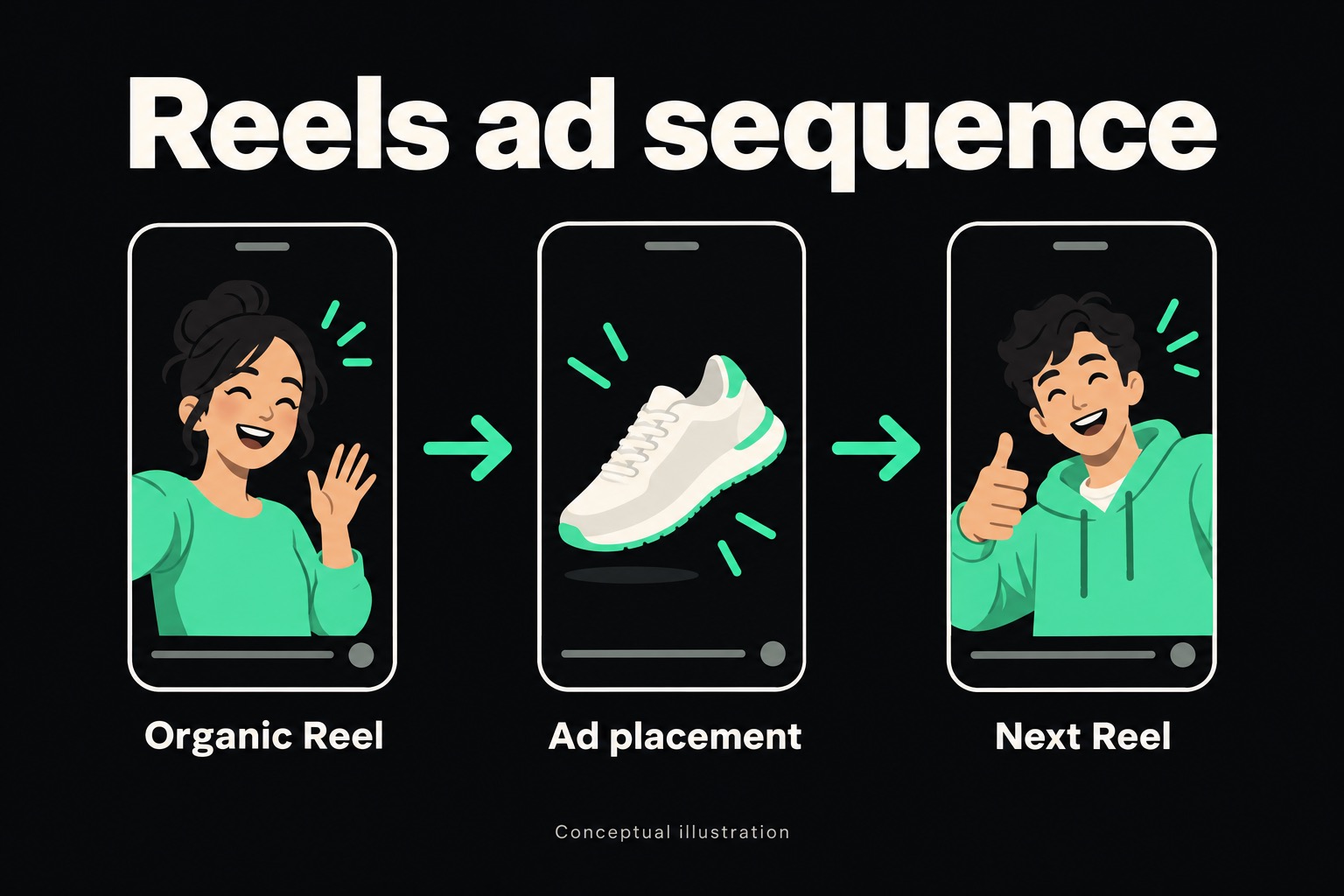
Post-view ads insert a short ad only once an eligible organic Reel has finished playing. A five-second countdown appears on the original Reel first, signaling that a promoted clip is coming next. A manual skip button lets the viewer move on immediately; skipping returns them to the Reel they were just watching, and swiping moves on to the next one in the feed.
The placement only surfaces after organic Reels longer than 60 seconds. That threshold belongs to the surrounding organic Reel, so there is no new asset requirement tied to length on the advertiser's side. Instagram built the option into the existing Reels placement tools, so an account already running Reels ads is already exposed to this inventory by default.
Open Ads Manager and check the Reels placement group on an active campaign. Confirm the inventory directly; availability has not been documented placement by placement.
Why new inventory moves the auction
Every new placement adds supply, and supply changes price before anyone has modeled it. Post-view ads open another slot inside a Reels ecosystem that already carries the largest share of Instagram's ad delivery and viewing time. More impressions competing for the same demand curve nudges pricing in ways that take weeks to settle, not days.
Measure now, while the shift is still settling. Pull the Reels CPM and frequency numbers for the past month before making any changes, so a client asking why the average moved next quarter gets an answer rooted in the account's own history.
What this means for an agency
Post-view ads are worth trialing on a handful of accounts before assuming they belong everywhere. Pick a few clients already running Reels ads with budget room for a controlled split. A full audit of every account can wait until the early results say whether the placement is worth the effort.
Existing Reels ad creative runs in this placement without a separate spec, since it sits inside the same Reels placement group advertisers already use. The variable worth testing is the environment: an ad following a natural break, right after a viewer chose to watch something all the way through.
Isolate the results before recommending a bigger allocation. Break out post-view impressions from the rest of Reels delivery wherever the reporting breakdown allows it, run the split for two to three weeks, and compare cost per result against the account's existing Reels numbers. A test without isolated numbers is just a guess with better production values.
What a test looks like in a client's account
Post-view ads show up small in a client's account. A new row appears in the placement breakdown, sitting inside the Reels group alongside placements already familiar to them.
Frame the test before a client spots that new row and asks about it. A short note explaining that the agency is trialing a placement Instagram just opened to every account, with a defined window and a defined comparison point, reads as active management.
How that test reads back also depends on attribution settings that shifted earlier this year, covered in the click-through attribution change. A skip, a full watch-through, and an actual click do not land in the same column. Check both the default and click-through-only views in Ads Manager before deciding whether the placement earned its budget.
The test to run this week
- Open Ads Manager and confirm post-view inventory is included under Reels placements for two or three active client campaigns.
- Pull a 30-day Reels CPM and frequency baseline for each account before making any placement changes.
- Confirm existing Reels ad creative meets the standard Reels spec; no separate format has been published for this placement.
- Set a comparison window of two to three weeks and, wherever the reporting breakdown supports it, isolate post-view impressions from the rest of Reels delivery.
- Send a short note to each client before the test starts, naming what is being tested and when they will see the readout.
Frequently asked questions
Does a post-view ad run after the advertiser's own Reel?
No. It runs after an eligible organic Reel from any creator in a viewer's feed. The advertiser's own content plays no part in it. Eligibility depends only on that organic Reel being longer than 60 seconds.
Can an account opt out of the placement?
That detail has not been published. Post-view ads live inside the existing Reels placement group instead of a separate toggle, so a dedicated opt-out may not exist as its own setting yet. Check placement-level controls in Ads Manager and confirm directly with a rep if exclusion matters for a given account.
Does the ad need a different creative format?
No separate format has been published. The placement sits inside the existing Reels ad tools, and current guidance points toward the same vertical video specs already used for other Reels placements. Confirm current spec requirements in Ads Manager before assuming an older asset still qualifies.
Post-view ads are an early window. Windows like this close fast, as soon as every other agency notices the same placement and starts testing it too. The accounts that get a real answer first are the ones running the test with a baseline already in hand.
Skayze treats a new placement as a test before it becomes a recommendation, with a baseline pulled before any budget moves. See how we work.
Sources · 2
- Instagram expands Reels post-view ads to all advertisers — Social Media Today, Jun 8, 2026. Full placement mechanics and global rollout.
- Instagram opens post-Reel ads to global advertisers — Exchange4media, Jun 12, 2026. Independent corroboration of the format.
Adrian Vale
Meta Marketing API v26 migration: the agency checks
Plan Meta Marketing API v26 migration with verified deadlines, placement and creative checks, and a client handoff that catches silent configuration changes.
Meta click-through attribution change: what to check
Meta narrowed click-through attribution to link clicks only, moving reactions, comments, and shares into a new engage-through metric. Here is what to check.
Product value optimization: Google Ads beta checks
Google Ads product value optimization lets retailers signal product priorities. Check the beta's scope, agree on client goals, and plan a measured agency test.